First-Funding Routes
What Is the Minimum You Can Deposit on Binance in South Africa?
Binance has no single minimum deposit. On-chain crypto credits from 0.01 USDT, P2P limits are set per advertiser and started at R150 on 22 September 2026, and the floor that actually matters is the 5 USDT minimum spot order once your money has landed.
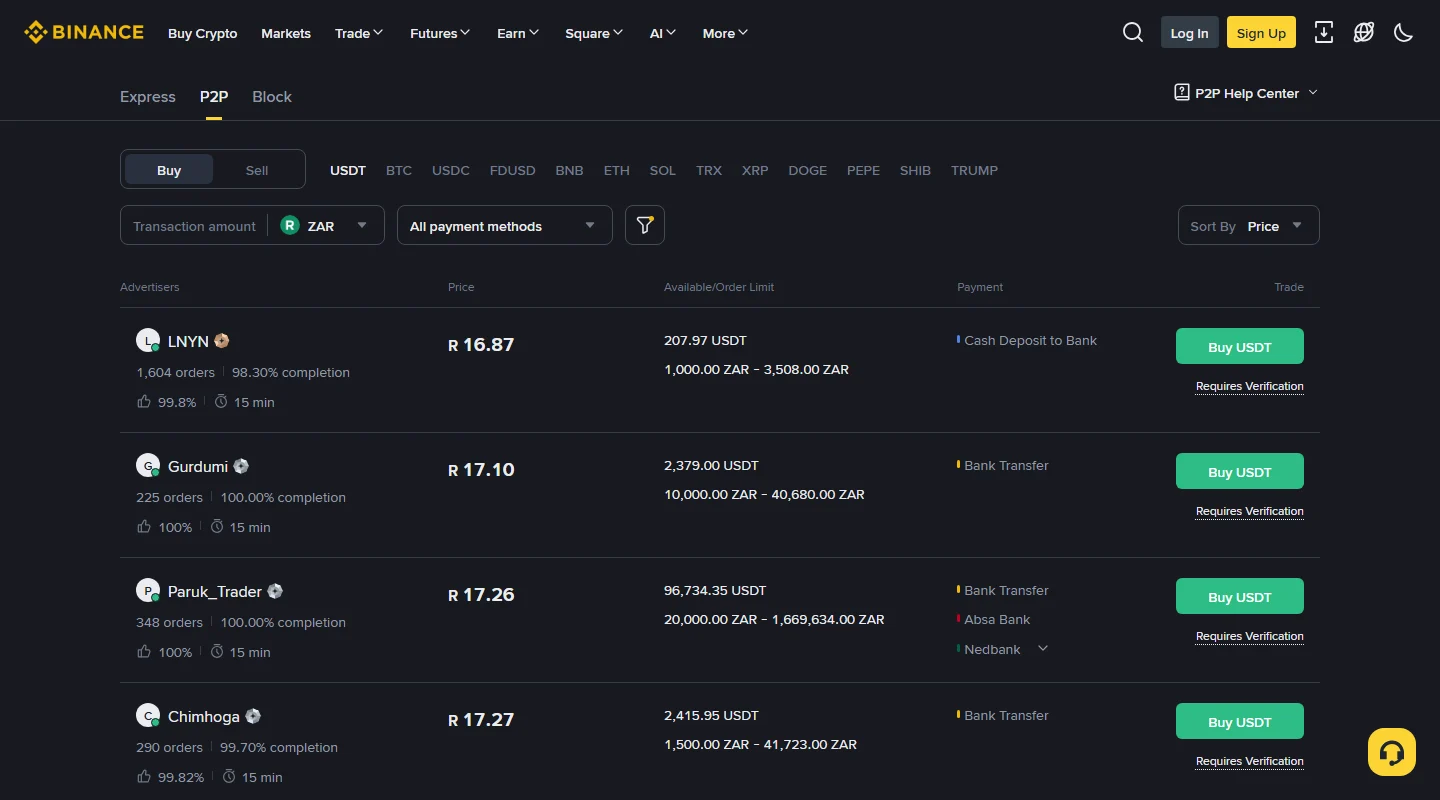
There is no single "minimum deposit" on Binance. Each funding route has its own floor, and the one that stops most South African beginners is not the deposit at all — it is what happens after the money lands.
Here is what each floor actually is, checked against Binance's own public data on 22 September 2026.
The four floors, side by side
| Route | What sets the floor | Value on 22 Sep 2026 |
|---|---|---|
| Crypto deposit (on-chain) | A per-network minimum below which Binance does not credit | 0.01 USDT on TRC20 and BEP20, 0.001 USDT on ERC20 and Solana |
| P2P with ZAR | Each advertiser sets their own order limit | Lowest limit found was R150; nothing at all under R400 from verified merchants |
| Card / one-click buy | Set by the payment provider and your bank | Only shown inside the order box once you are signed in |
| Spending it on spot | Binance's minimum order value | 5 USDT per order on BTC/USDT, ETH/USDT and BNB/USDT |
The on-chain floor is so low it is effectively no floor. The P2P floor is the one you will actually hit.
R200 on P2P: what really happens
If you open the ZAR P2P market and type 200 into the amount box, the default view returns nothing:
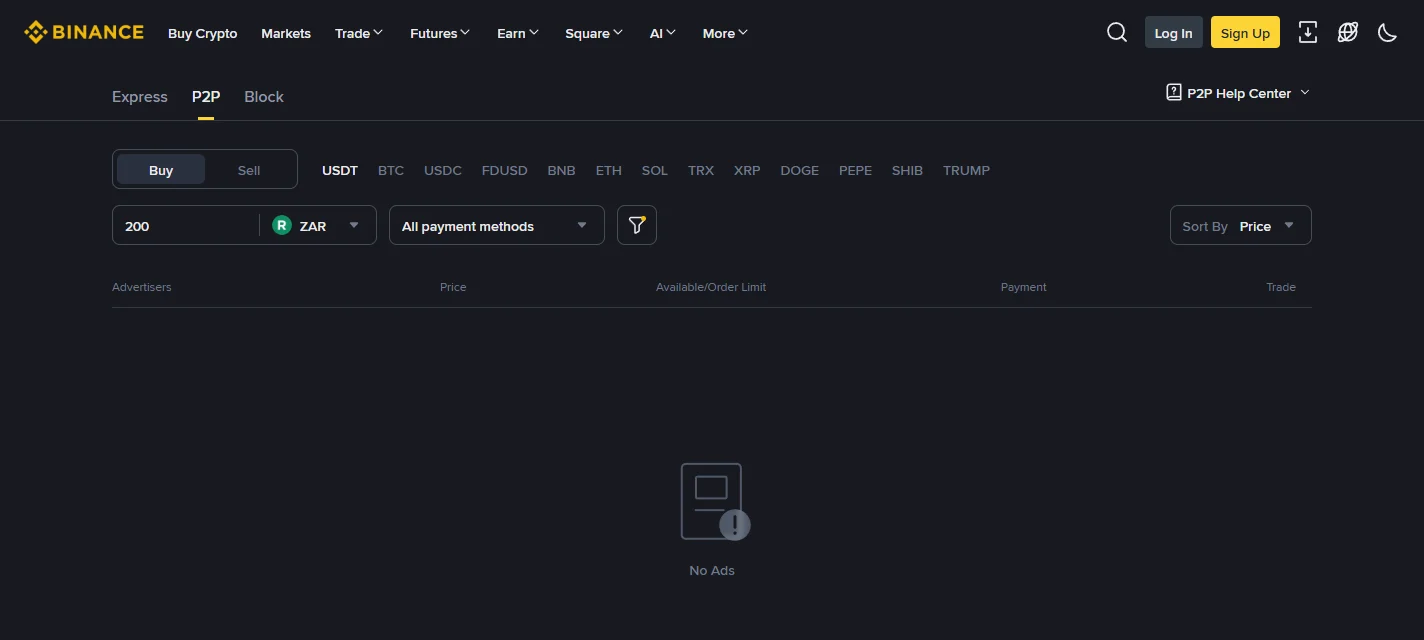
That "No Ads" result is not because R200 is below a platform rule. It is because the default P2P list shows verified merchants, and on this day no merchant advertised an order limit that low. Querying the same market without the merchant filter returned six offers that accept R200, all of them from ordinary users rather than verified merchants, with limits starting at R150.
So R200 is technically possible and practically awkward: your choices drop to a handful of non-merchant counterparties. If you are not yet comfortable judging who to trade with, the checks that separate a safe EFT merchant from a risky one matter far more at this size than at R5,000.
Small amounts cost more per rand
Fewer offers also means worse pricing. Three snapshots taken within the same minute on 22 September 2026:
| You want to spend | Offers that accept it | Cheapest price | USDT you receive |
|---|---|---|---|
| R200 | 6 | R17.00 | 11.76 |
| R1,000 | 22 | R16.80 | 59.52 |
| R5,000 | 24 | R16.80 | 297.62 |
The cheapest R200 offer is about 1.2% more expensive per USDT than the cheapest R1,000 offer. On R200 that gap is small in rand terms, but it sits on top of the spread you already pay, and it is the opposite of what beginners expect — the smallest test trade is the worst-priced one. The same market view makes the per-advertiser limits visible:
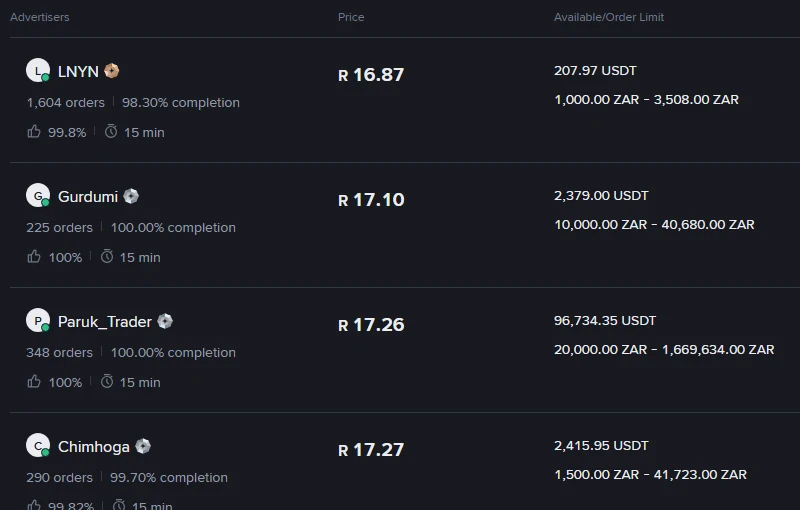
Every row carries a different range. There is no platform-wide number to look up; you read the Available/Order Limit column and pick a row your budget fits into. If you want the full arithmetic on what a realistic first purchase leaves you with, we worked it through in what R1,000 actually buys after every fee.
The floor that catches people out
Say you fund R200 and end up with 11.76 USDT. You can trade that — just.
Binance's minimum order value on spot is 5 USDT, which means one order of BTC or ETH is fine, but you cannot split 11.76 USDT into four positions. Deposit R50 instead, get roughly 2.9 USDT, and you own a balance you cannot place a single spot order with.
Withdrawing it back out has its own floor: the minimum USDT withdrawal is 5 on TRC20 and ERC20, and 3 on Arbitrum, Optimism, TON and Aptos. The network fee comes off on top — 1.5 USDT on TRC20, 0.3 on ERC20 and Solana, 0.01 on BEP20 at the time of writing.
Put together: a balance under about 10 USDT is money that went in but cannot usefully come out or be traded more than once. That, not the deposit minimum, is the number worth planning around.
Card and one-click buy
The card route does have a minimum, but Binance does not display it on the public page — the amount box only validates once you are signed in, and the limit depends on your card issuer and the payment provider handling the transaction. Check it by entering your intended amount in the order box before confirming; if it is below the floor, the warning appears directly under the field.
Whether a card is even the right route for a first purchase is a separate question, covered in the comparison of ZAR funding routes.
A sensible first amount
Nothing here is advice on how much to risk. But mechanically, based on the floors above:
- Under R100 — the balance is too small to place a spot order or withdraw. Avoid.
- R200 to R400 — works on P2P, but only with non-merchant advertisers and at a worse price.
- R500 and up — verified merchants become available, and the price gap against larger orders mostly closes.
How to check these numbers yourself
All of them move. The P2P limits change hourly as advertisers post and pull offers; the network minimums and fees change when Binance updates them.
- P2P limits: open the ZAR market, type your amount in the transaction box, and read the Available/Order Limit column. If the list is empty, the amount is below what the currently listed advertisers will take.
- Minimum spot order: shown under the order form on the trading page as the minimum order value.
- Network minimums and withdrawal fees: listed per network on the deposit and withdrawal screens when you pick a coin.
The figures in this article are a snapshot of 22 September 2026 and are there to show you the shape of the problem, not to be copied as current prices.