
Fees and Real Cost
R1,000 on Binance: ZAR Cost Worksheet
Use a blank worksheet to compare P2P, card and local-exchange routes by the final USDT available on Binance, without relying on a stale market price.
The honest answer to “How much USDT does R1,000 buy?” is not a fixed number. It changes with the quote, route, payment method, spread, bank charge and network fee. A useful answer is a worksheet you can fill in immediately before paying.
The common unit is net USDT available in Binance. For each route, record the final rand spent and the final USDT credited. Effective cost per USDT is total ZAR spent ÷ net USDT. The route with the lowest displayed fee is not necessarily the route with the best net result.
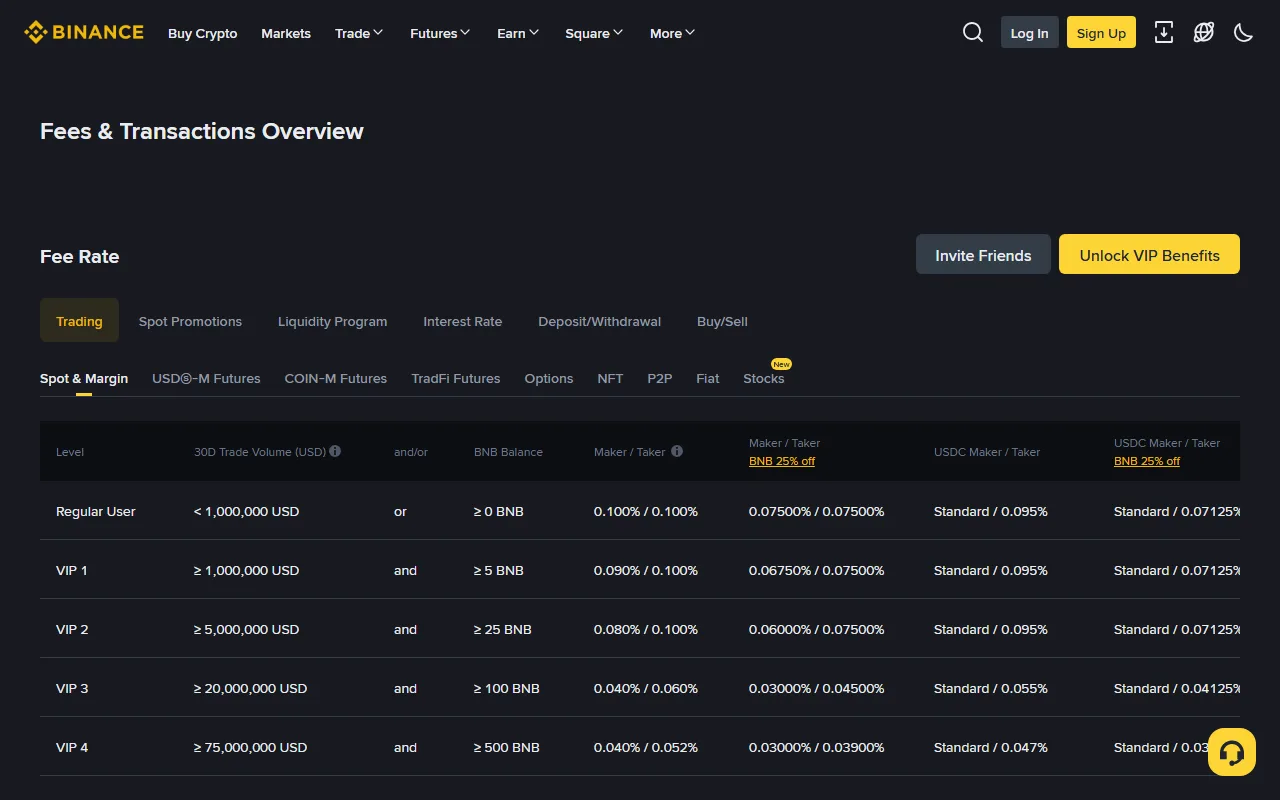
Screenshot: Binance's public Fees & Transactions Overview, captured on 11 August 2026. Account tier, product and optional BNB discount can affect trading fees; use your logged-in rate before a trade.
Fix the comparison conditions
Use the same R1,000 budget, target USDT and destination wallet. Capture all quotes within a short window because market movement can exceed the fee difference. If a route quotes another crypto, include the cost of converting it to USDT rather than comparing unlike assets.
Do not insert a market price from this article. Write the time next to every quote so the worksheet remains an audit trail rather than a prediction.
Blank R1,000 worksheet
| Input | Binance P2P | Card purchase | VALR / Luno transfer |
|---|---|---|---|
| Quote time | |||
| Starting budget | R1,000 | R1,000 | R1,000 |
| Bank / card amount posted | |||
| Platform or trading fee | |||
| Crypto after purchase | |||
| Withdrawal / network fee | n / a | n / a if credited directly | |
| Net USDT in Binance | |||
| ZAR per net USDT |
Use posted bank amounts for the final version. A card authorisation still marked pending belongs in a provisional column.
P2P calculation
Enter R1,000 on the public or logged-in ZAR market and compare only adverts whose limits and payment method fit. Record the order's final USDT amount. If your bank charges for the EFT, total spend is R1,000 plus that charge.
P2P net USDT = order release amount.
P2P effective rate = total bank spend ÷ released USDT.
The advert price already contains the counterparty's spread. “No separate platform fee” does not mean the quote equals a wholesale exchange rate. Merchant safety, account-name requirements and appeal evidence remain part of the decision.
Card calculation
Record the final confirmation quote, then replace the provisional rand amount with the issuer's posted amount. The issuer may apply conversion or transaction charges that are not final when Binance presents the quote.
Card effective rate = issuer's posted ZAR total ÷ USDT credited.
If the order failed and the bank entry is only a pending hold, it is not a successful R1,000 sample. Wait for the status to resolve and avoid duplicate attempts.
Local-exchange transfer calculation
Record the ZAR deposit, the local trade's executed amount and fee, then the crypto withdrawal quote. If you buy Q USDT and the sender deducts F USDT, expected Binance receipt is Q−F, subject to Binance's minimum deposit.
Transfer effective rate = total ZAR used ÷ (Q−F).
If the platform does not support a matching USDT network and you use another asset, add the sell/buy fees and spreads for every conversion. A cheaper blockchain transaction can still produce less USDT after two trades.
Measure the difference in rand and USDT
Suppose route A returns UA USDT and route B returns UB USDT from the same R1,000. The useful difference is UA−UB, not a marketing fee percentage. You can also multiply that USDT difference by one consistent reference rate to express it in rand, clearly marking the rate and time.
For small budgets, ask whether the absolute saving justifies another account, a withdrawal activation period or an unfamiliar irreversible network. A route that is R5 cheaper but much harder to verify may not be the sensible first transaction.
Where the referral rebate belongs
Referral code CG17CR7R's official registration page displayed up to 20% in trading-fee rebates when checked. Apply that only to eligible trading fees actually shown in your account. It is not 20% extra USDT on an R1,000 deposit, and it does not reduce a bank charge, P2P spread or blockchain withdrawal fee automatically.
If the trade fee is T and your account confirms rebate rate r for that transaction, the benefit is T × r. Keep it separate until credited; do not subtract an assumed rebate from the quote.
A final evidence check
Save the quote, order ID or TxID, posted bank amount and wallet credit. Redact account numbers, passwords, OTPs, card data and unrelated transactions. Mark unsettled entries as pending and re-run the worksheet after they settle.
The worksheet answers a narrower but more useful question than “Is Binance cheap?” It shows which available route delivered the most usable USDT for your R1,000 at a stated time, under conditions you can reproduce.
Add time and failure columns
Two routes can deliver almost the same USDT but differ sharply in how long funds remain unusable and what happens after an error. Add “time until usable” and “recovery route” to the worksheet. Record real elapsed time; do not copy a promised average.
For P2P, recovery evidence sits in the order, chat and bank record. For a card, it sits in the Binance order and issuer ledger. For an on-chain transfer, it begins with the withdrawal ID and TxID. A small saving may not justify a route whose evidence you cannot collect.
A break-even check for fixed withdrawal fees
Suppose the local-exchange purchase is d rand cheaper per USDT than the direct route and the crypto withdrawal fee is F USDT. Ignoring other differences, the approximate break-even quantity is F × reference USDT price ÷ d. Below it, the fixed fee can erase the better buy price.
Use live values captured at the same time. If d is close to zero, the break-even amount becomes large, which signals that adding a transfer step for a tiny quote advantage is unlikely to help R1,000.
Do not double-count spread
When a page directly shows ZAR paid and USDT received, dividing those values already captures that quote's rate and embedded spread. Add only charges outside the quote, such as a separately posted issuer charge. Adding a published “spread” again would exaggerate cost.
Likewise, if the sender deducts F from Q and shows Q−F as net, use the net amount once. The worksheet should reconcile to the wallet, not maximise the number of fee labels.
Re-run after settlement
Keep a provisional worksheet at confirmation and a final version after the bank posts and the Binance wallet credits. The difference teaches you where the estimate changed. Mark failed or still-pending routes separately instead of averaging them into successful transactions.
After several comparable samples, use the median effective rate rather than selecting one unusually favourable order. That creates a personal operating record without pretending past prices predict the next quote.
Related checks before you fund
- Can You Deposit ZAR Directly into Binance? Bank Transfer, P2P, Card and Crypto Routes
- VALR or Luno to Binance: Which Network Makes a Small USDT Transfer Cheaper?
- Binance Card Payment Declined in South Africa: Pending Hold, Reversal or Completed Charge?
- Binance South Africa Referral Code: How to Check It Before You Register
Sources and verification
- Binance Fees & Transactions Overview
- Binance Academy: Your Guide to Binance Deposit/Withdrawal
- VALR: What are VALR's charges?
- Luno: How do I send cryptocurrency?
Sources and screenshot checked on 11 August 2026, UTC+8. This worksheet is not a live quote or investment recommendation.
If you have not registered yet
Read the Binance referral-code guide. It explains how to verify the official domain, code CG17CR7R and the advertised benefit of up to 20% in trading-fee rebates. Eligibility, products and the final rate depend on the registration page and account terms; Zovrino may receive a commission from an eligible referral.
If you do decide to open an account, go in through this link — the code CG17CR7R fills itself in. We may earn a commission from that.